The Orbit Suite
05/01/2025
Good tools improve a fraction of the world, by a fraction. Orbit aims to build a tool to improve the experience of every living human, in perpetuity. Over the course of a summer, I took moonshot after moonshot and built a set of out-of-body experiences.
Orbit is a startup that’s trying to figure out downstream effects of vestibular stimulation (read– controlling your sense of balance via an organ near your ears). On the surface it has almost nothing to do with my field of interest (Extended Reality), so I should probably tell the story of how I got involved at Orbit.
I was procrastinating on my Machine Learning homework when I came across an interesting post on Reddit, which brought me to a profoundly un-interesting website. This website has been reworked at least twice since I interviewed, but as of 5/17/2026 it’s still kind of boring, which goes to show that the core team has their priorities straight at least.
Cool premise, but reminds me of Ikea furniture
The company was so fascinating and the website so basic that I assumed that there was no way it was just what it appeared on the surface, and instead must be some kind of Google-esque puzzle. So I did what every middle-school hacker would have done, and tabbed into inspect mode, where I actually found something interesting!
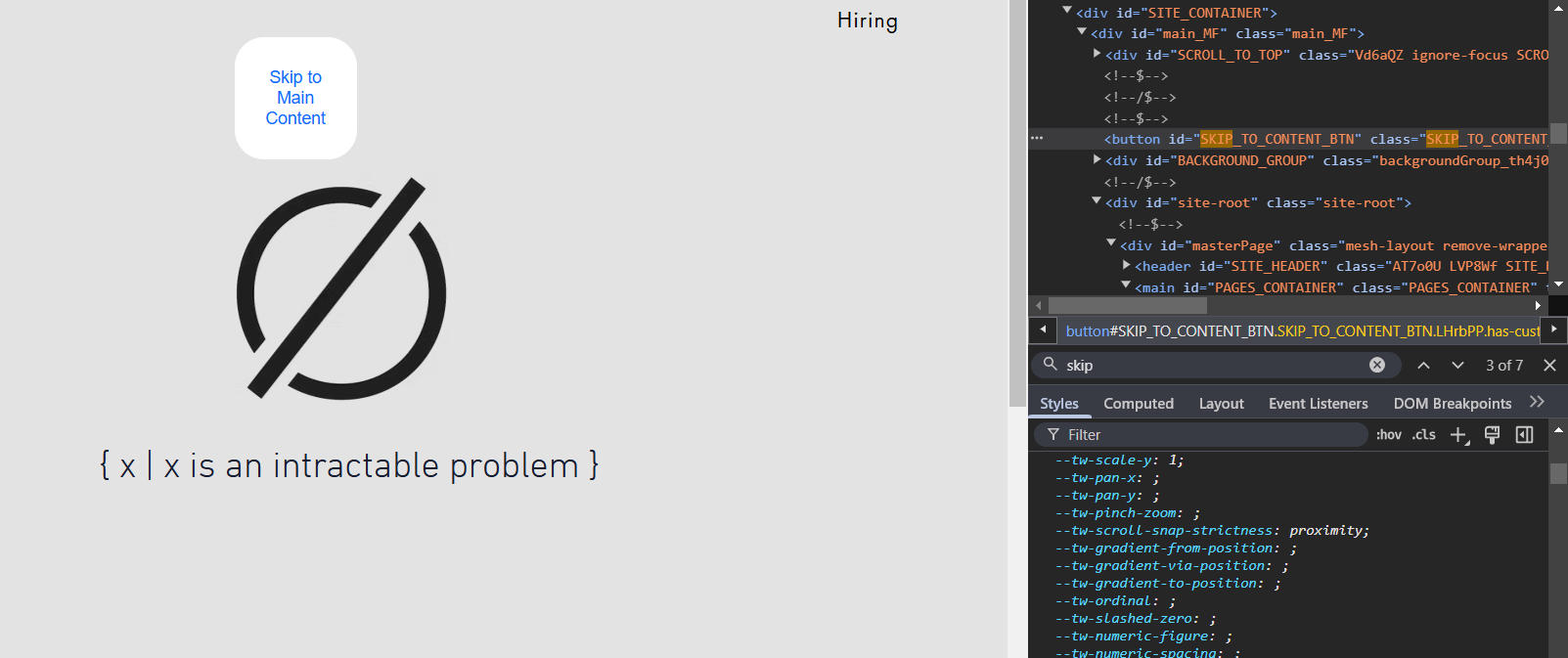
That’s how the website looked in 2024 (+ my findings)
And then I realized that the “Skip to Main Content” button (which I forced out via inspect-mode editing) was just some sort of page artifact that had no functionality attached to it. I went a bit further in and found an autogenerated Wix comment, so I concluded that Occam’s Razor had once again cut away some of my time, and this website was really what it looked like on the surface– a fairly boring website slapped together to provide basic internet presence.
Sunk cost fallacy dictated I still tell someone about what I did, so I sent an email to the one listed on the website (with my resume, because why not), and to my shock I actually got a response!

That spiraled into an interview, a work trial over spring break (where I prototyped out the Superhero Simulator) and an internship. I had a great time and learned quite a bit, but I’d mostly like to show you three projects I built over that I think are worth displaying.
All of these projects relied on a VR simulation I created or modified, hooked up to one of the early versions of Orbit’s vestibular stimulation tech (as seen below on yours truly)
The Superhero Simulator
Premise: VR motion sickness can be overcome via vestibular stimulation (and the two combined can create a fun flying game).
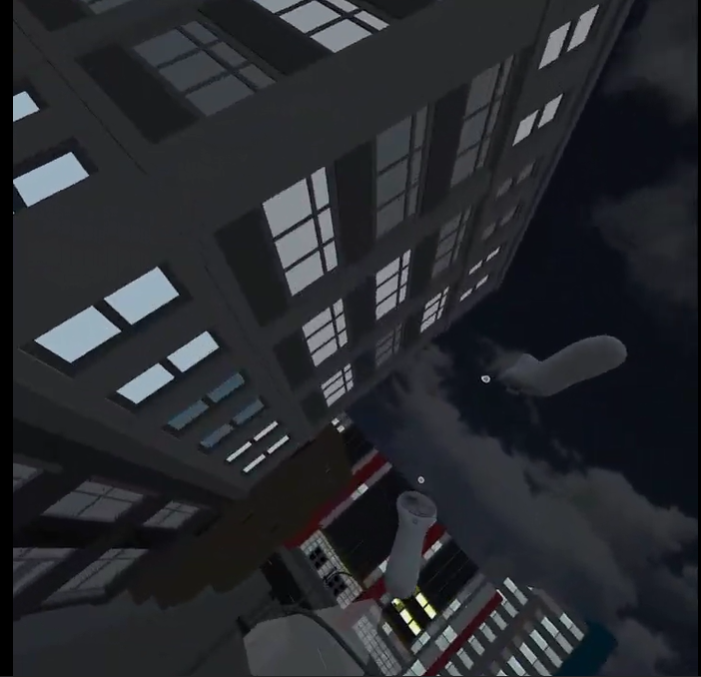
I built an untethered, exploratory version (the video makes more sense)
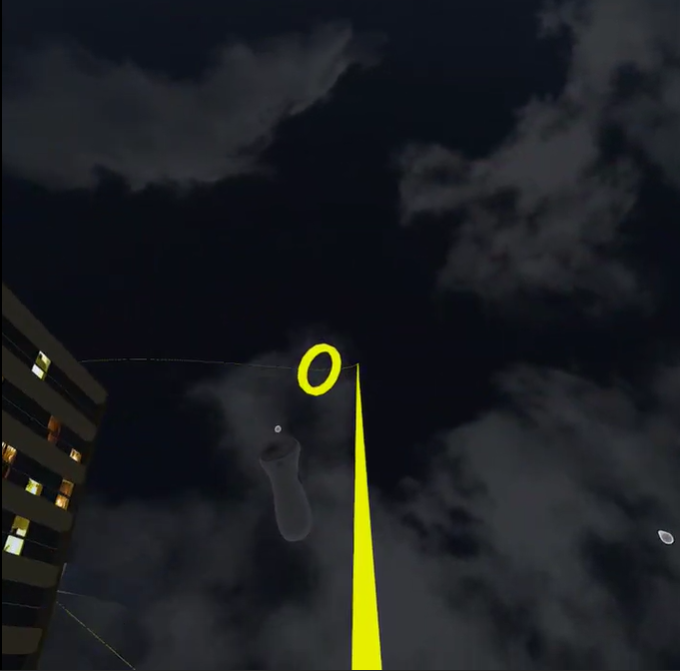
Along with a “guided” version that’s purely stimulation (video)
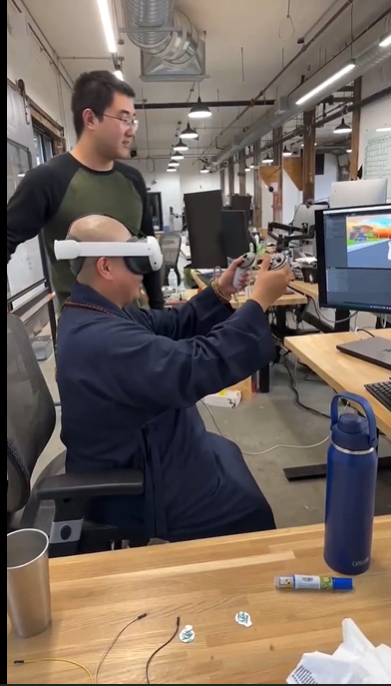
Also demoed it to a Buddhist Monk! (video)
Unbalanced Horror Game
Premise: Vestibular stimulation can be felt accurately enough to provide general instructions, such as “left” or “right”. And what’s more motivating than being lost in a horror game?
The game is as follows: Player 1 has a flashlight in VR, has the vestibular stimulation setup on, and is put in an autogenerated maze with 3 monsters. Player 1 will never see the map, and instead has to trust Player 2, who does see the map alongside the monster locations, to navigate them through. Player 1 will also hear the monsters when they come close.
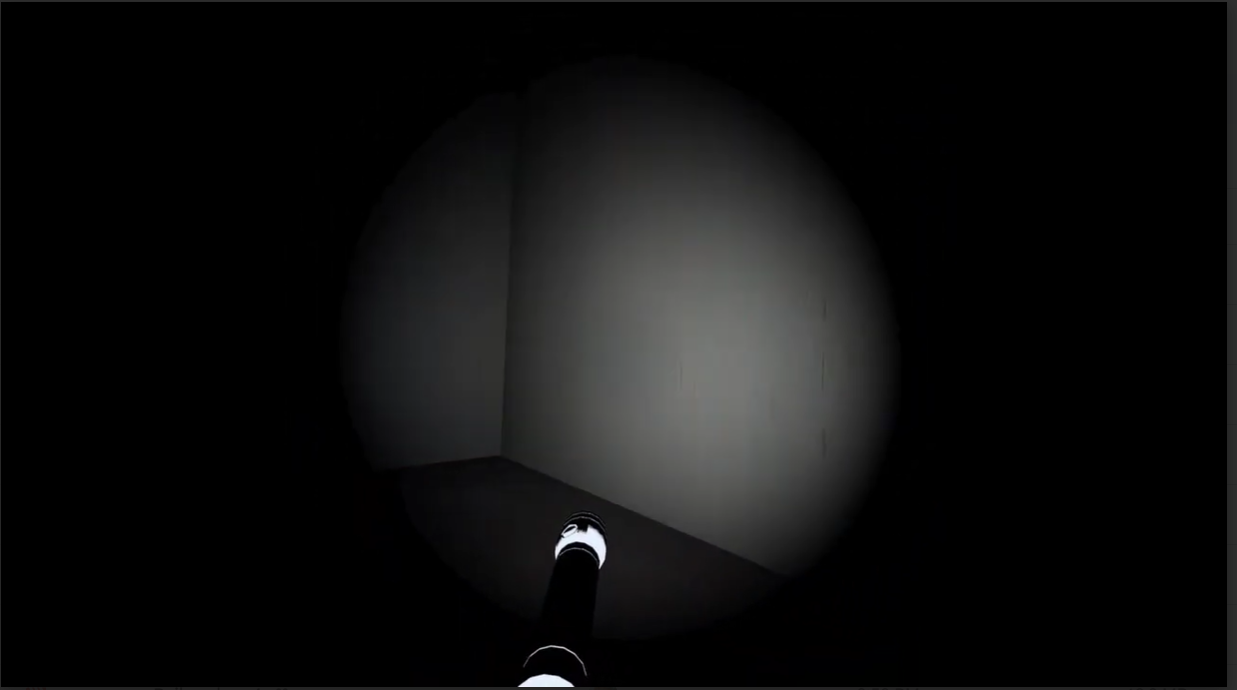
This is what Player 1 sees (video)
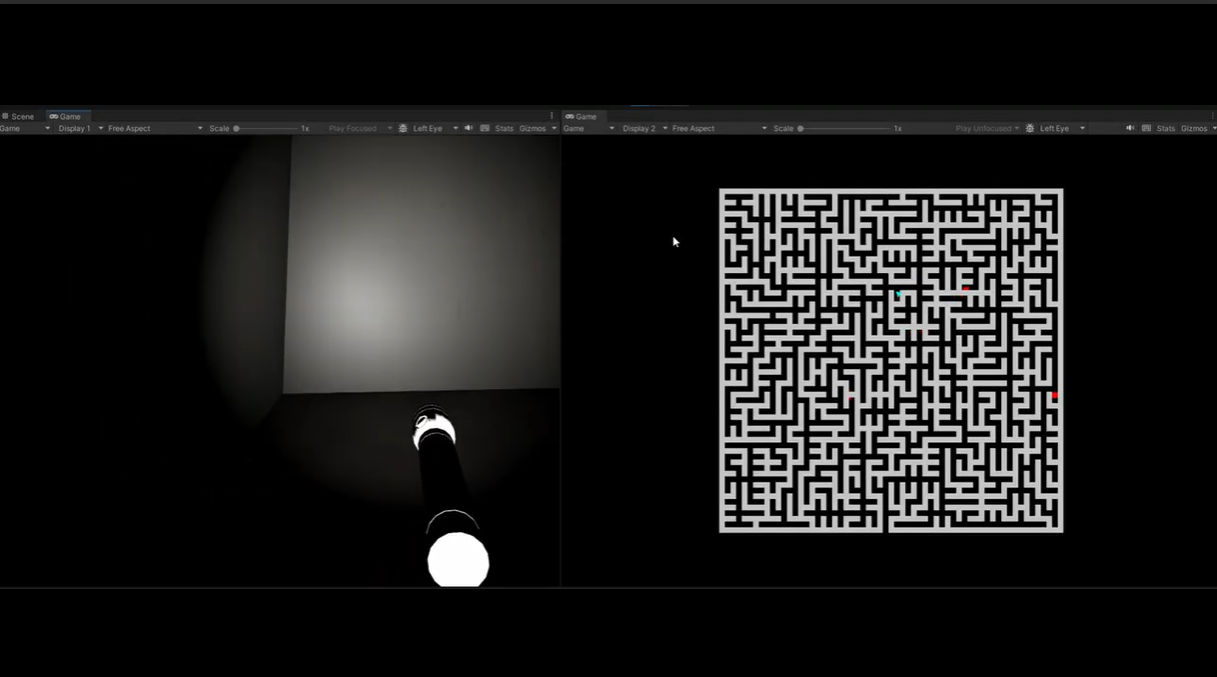
This is what Player 2 sees (video)
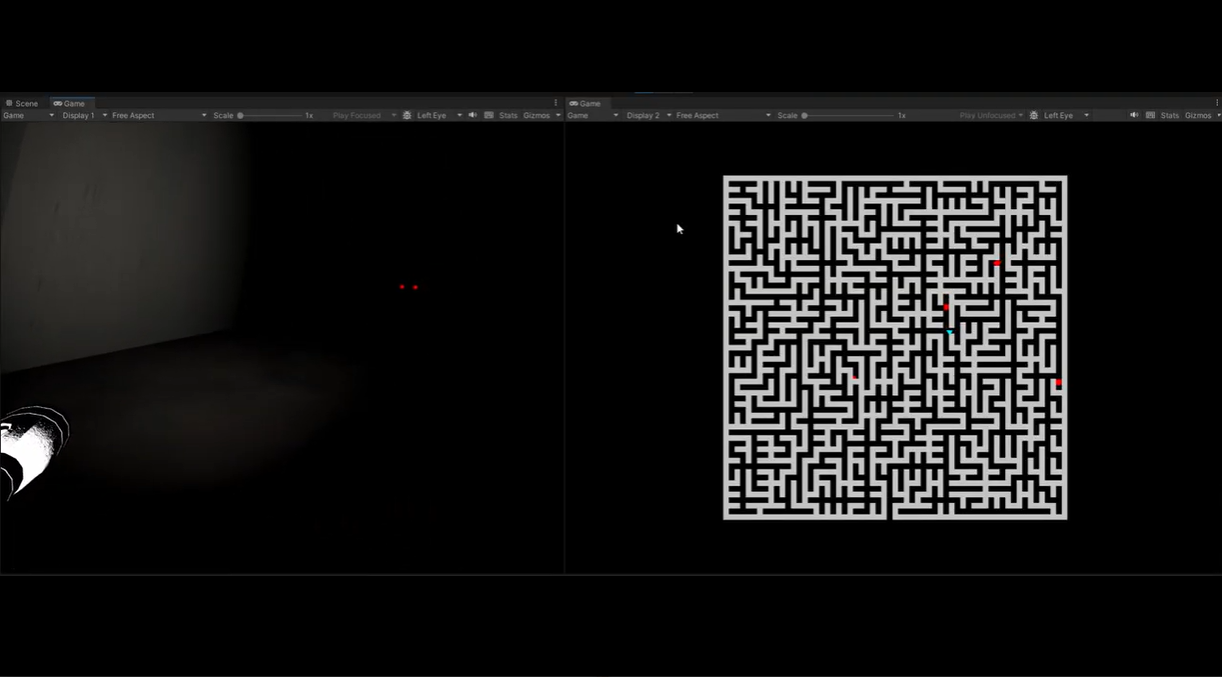
I defined three monster AI behaviors appearing randomly, drawing inspiration from Pacman– completely arbitrary movement, “hunting” movement where the monster tracks the location of the user from 3 seconds ago, and “sentinel” movement where the monster stays in one location. The AI, regardless of behavior, will begin moving faster and chase Player 1 down if you are within line of sight.
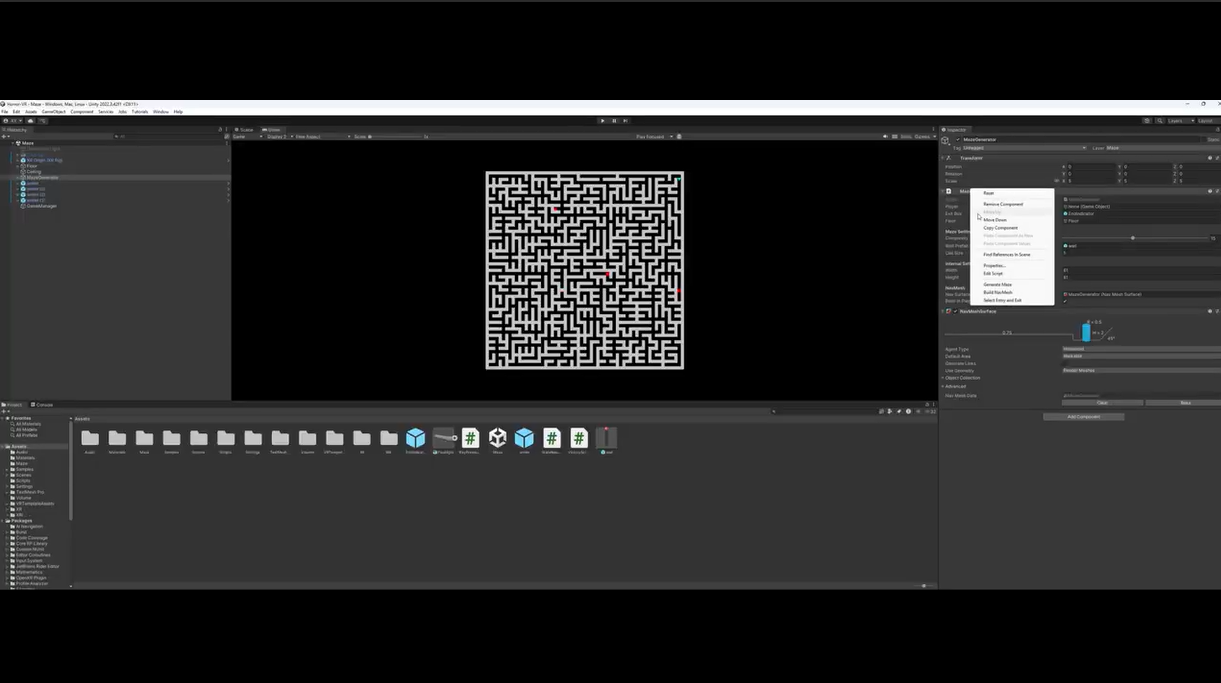
Wrote a basic recursive script to autogenerate mazes(video)
Vestibular Flight Simulator
Premise: The feeling of “accurate” flight can be achieved with VR + vestibular stimulation– i.e. the pressure and presence of gravity, along with acceleration in roll, pitch, and yaw (RPY). I used telemetry data from Microsoft Flight Simulator along with internal Orbit data to extrapolate signals for RPY to create a genuine simulator.
Through trial and error, I also found that the Arrakis Ornithopter was actually the best at creating interesting signals, due to its rather fantastical nature as a high-velocity, high-manuverability machine.
Unfortunately, I did not record video or take photos of this experience, so I’m substituting in photos of the base MSFS experience from the internet.
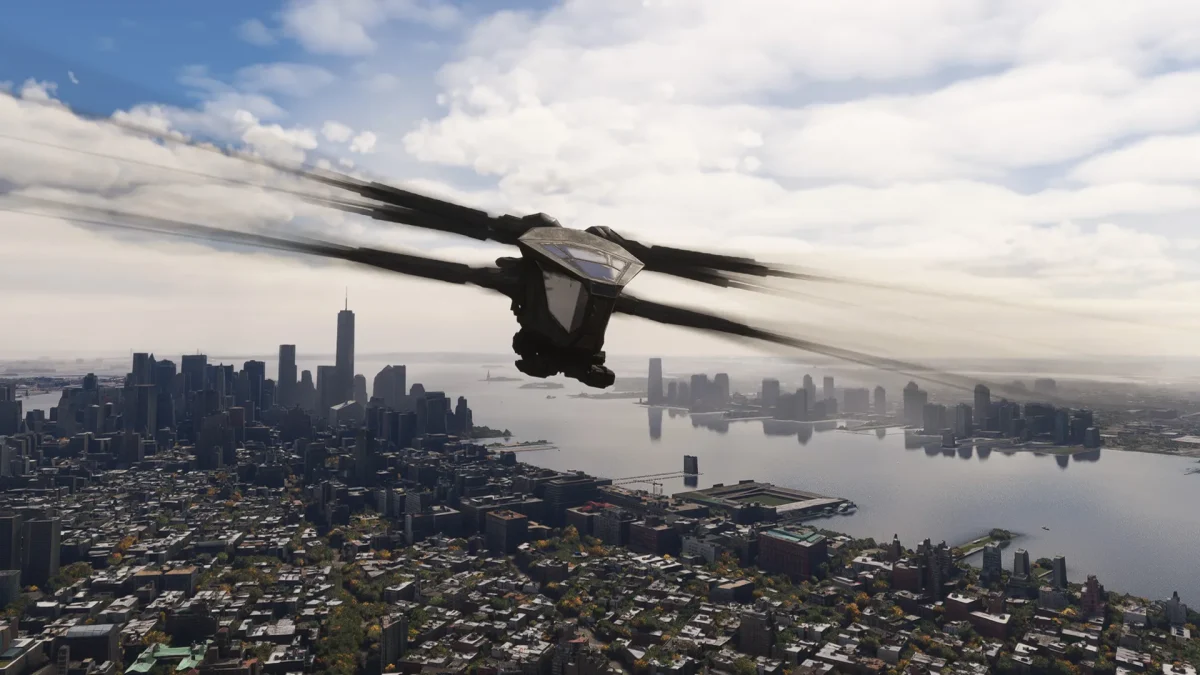
3rd-person perspective (source)
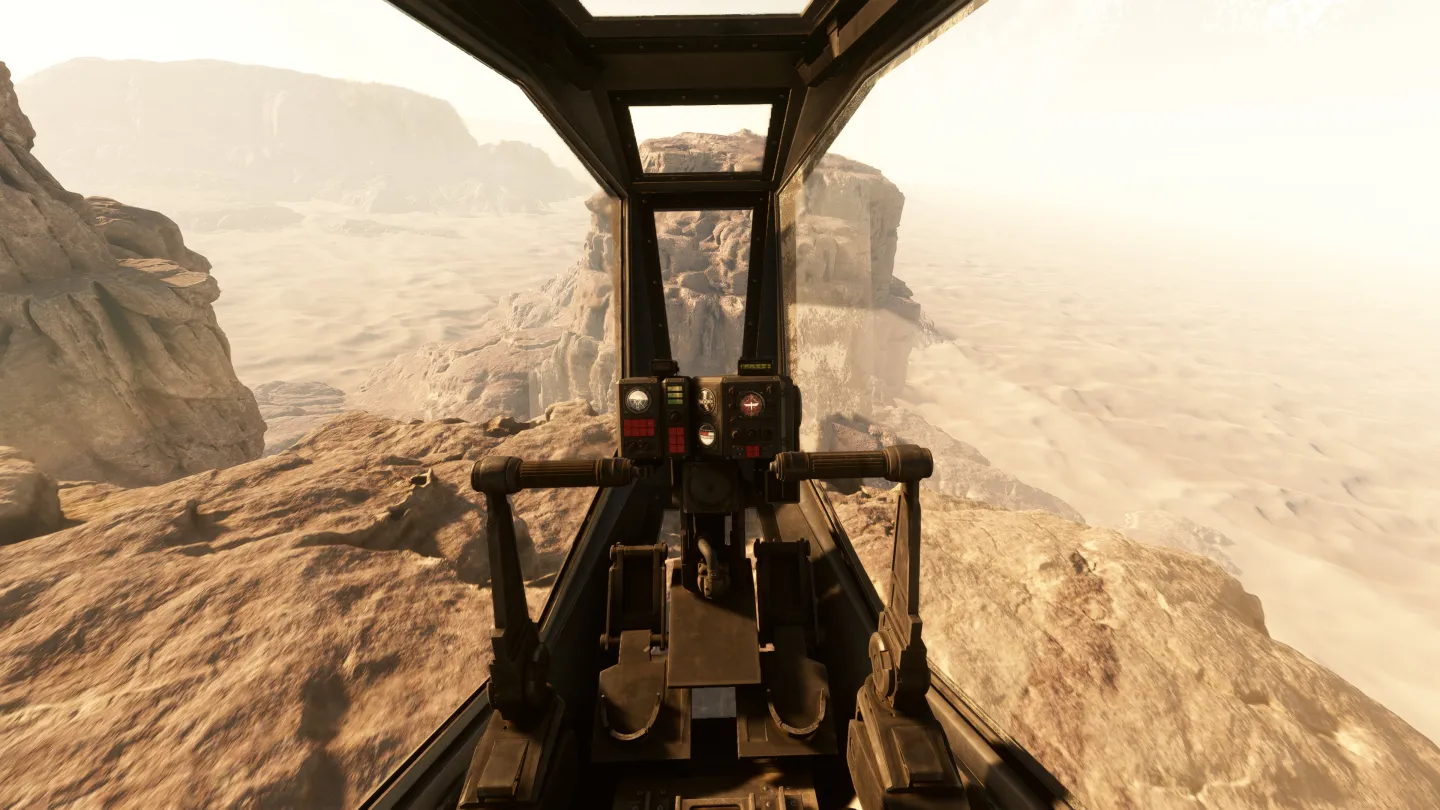
First-person perspective (source)